Why Does the Moon Change Shape?
A science project by Max Jaeger
Explore the Project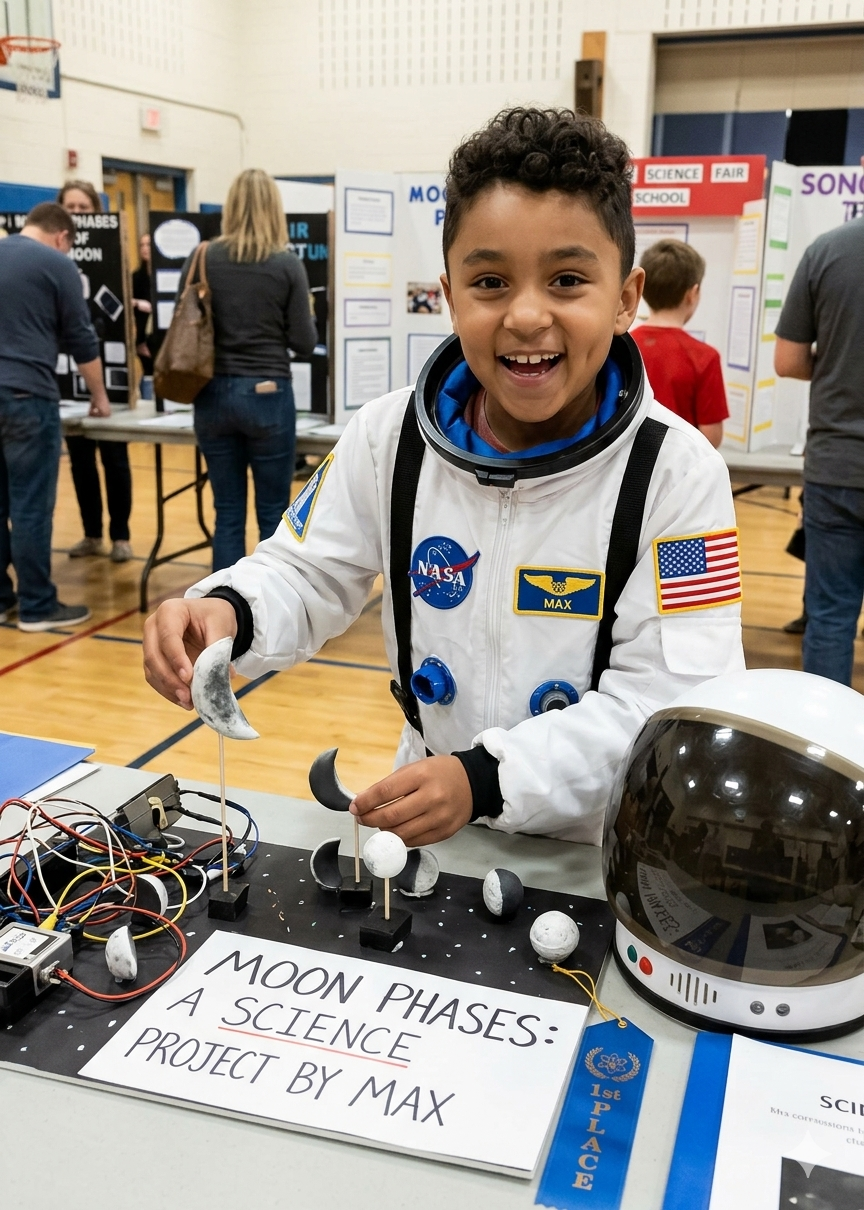
Hi, I'm Max!
I'm in 3rd grade. I love space, building things, and figuring out how stuff works.
When I looked up at the sky one night and saw the Moon was only a tiny sliver, I got curious. Where did the rest of it go? That question turned into this whole science project!
I spent weeks reading, building a model, and doing experiments to find out the truth about moon phases. Spoiler: the Moon doesn't actually change shape.
What Is This All About?
Science Question
Does the Moon actually change its shape, or does it just look different from Earth depending on where it is in its orbit around us?
My Hypothesis
I think the Moon does not change shape. I think the Sun lights up different parts of the Moon as it travels around Earth, and that's what makes it look different to us.
My Experiment
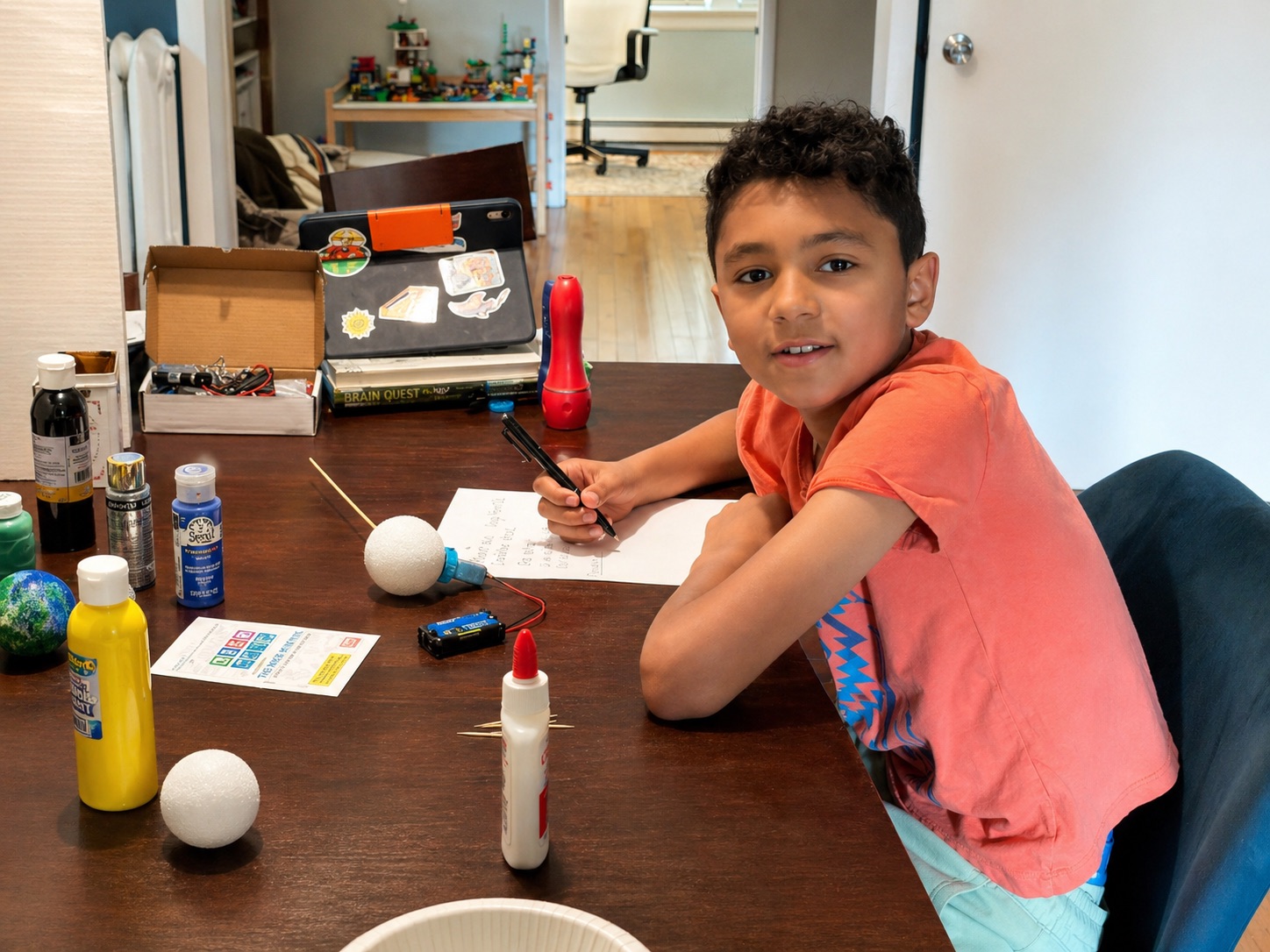
I built a physical model using a lamp (the Sun), a ball (the Moon), and my head (Earth) to see how light falls on the Moon differently as it moves around.
My Result
My hypothesis was correct! The Moon's shape never changes. Only the lit-up part that we can see from Earth changes as the Moon orbits us.
Materials I Used
- A bright lamp or flashlight (this was the Sun)
- A white foam ball on a stick (this was the Moon)
- My own head (this was Earth, I stood in the middle)
- Ruler, tape, and a dark room
- Science notebook for recording observations
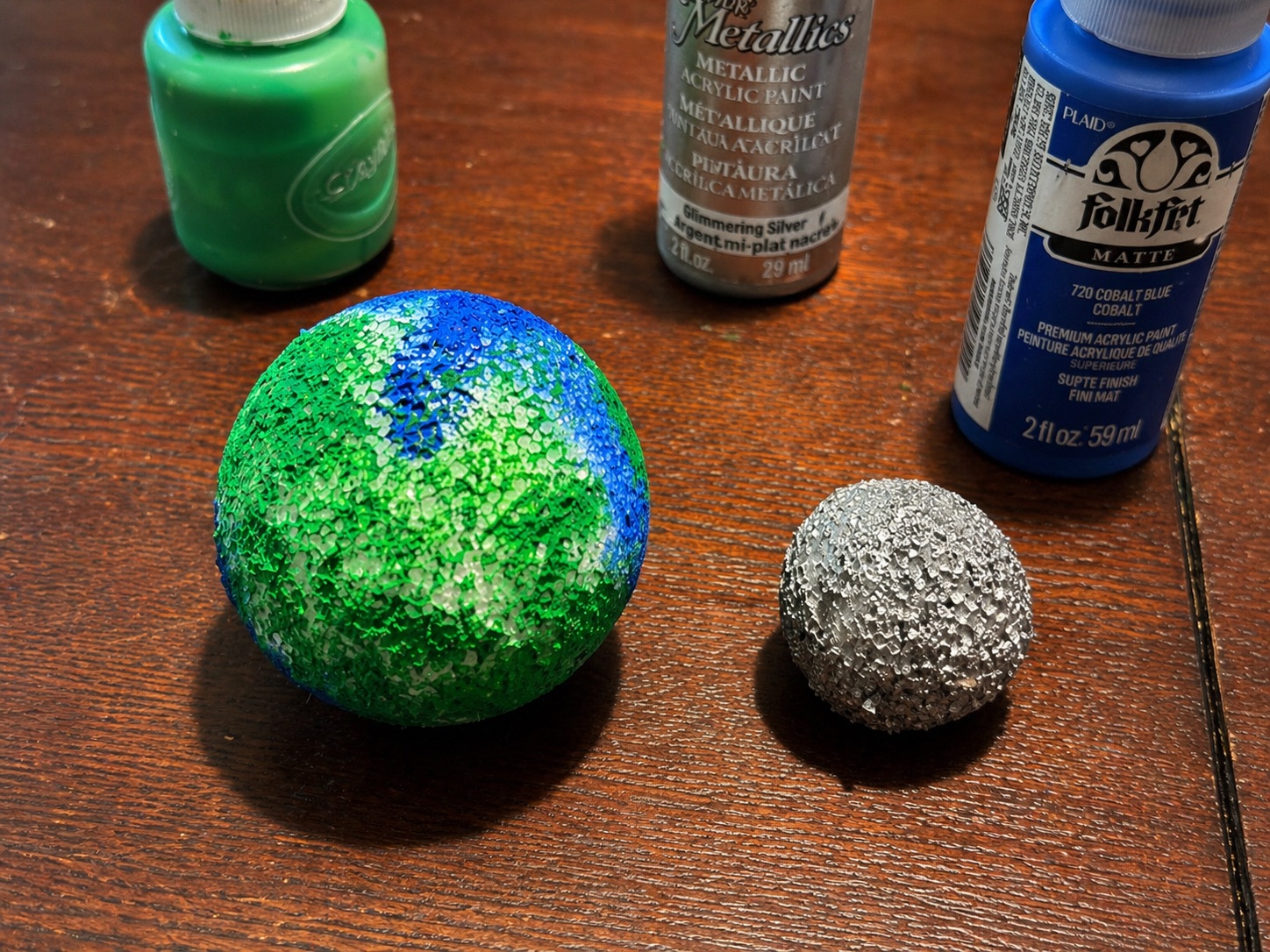
- Styrofoam, paint, and cardboard for the display model
The 8 Phases of the Moon
As the Moon travels around Earth each month, we see different amounts of the lit side. These are called moon phases. Click or tap a phase to learn more!
Select a Phase
Tap any moon around Earth to learn about that phase!
How My Model Works
I used a lamp and a ball to show how the Sun lights up the Moon. Here's the setup!
When the Moon is between Earth and the Sun, the lit side faces away from us. We can't see it. This is the New Moon!
Set Up the Sun
Put the lamp in a dark room. This lamp acts just like our real Sun sending light across space.
Be the Earth
Stand in the middle, facing the lamp. Your eyes are Earth, watching the Moon from the center of its orbit.
Move the Moon
Hold the foam ball up and slowly turn around in a circle. Watch how the light on the ball changes, just like real moon phases!
Record Everything
Draw what the moon looks like at 8 different spots around the circle. Compare with real moon phase photos.
How Max Built It
It took a lot of planning, building, and a tiny bit of mess. Here's how the project came together!
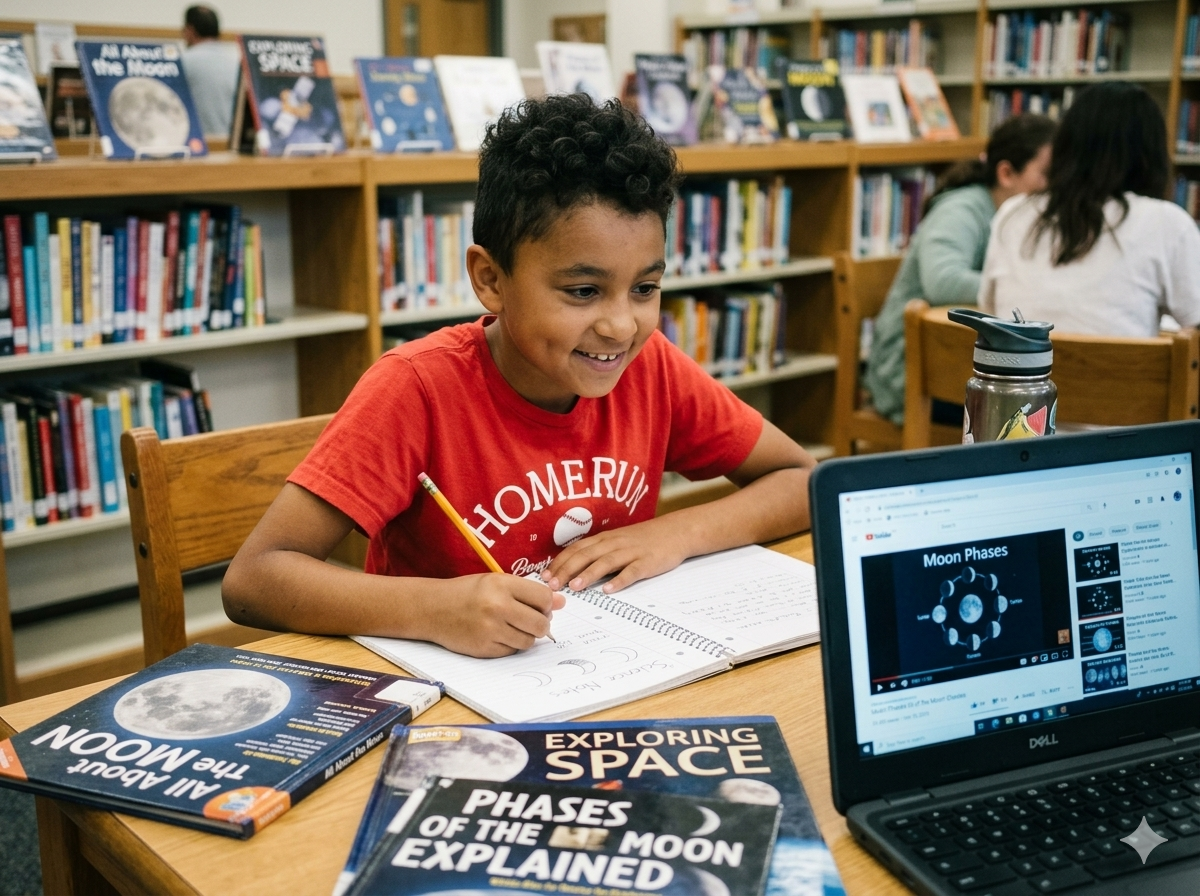
Doing the Research
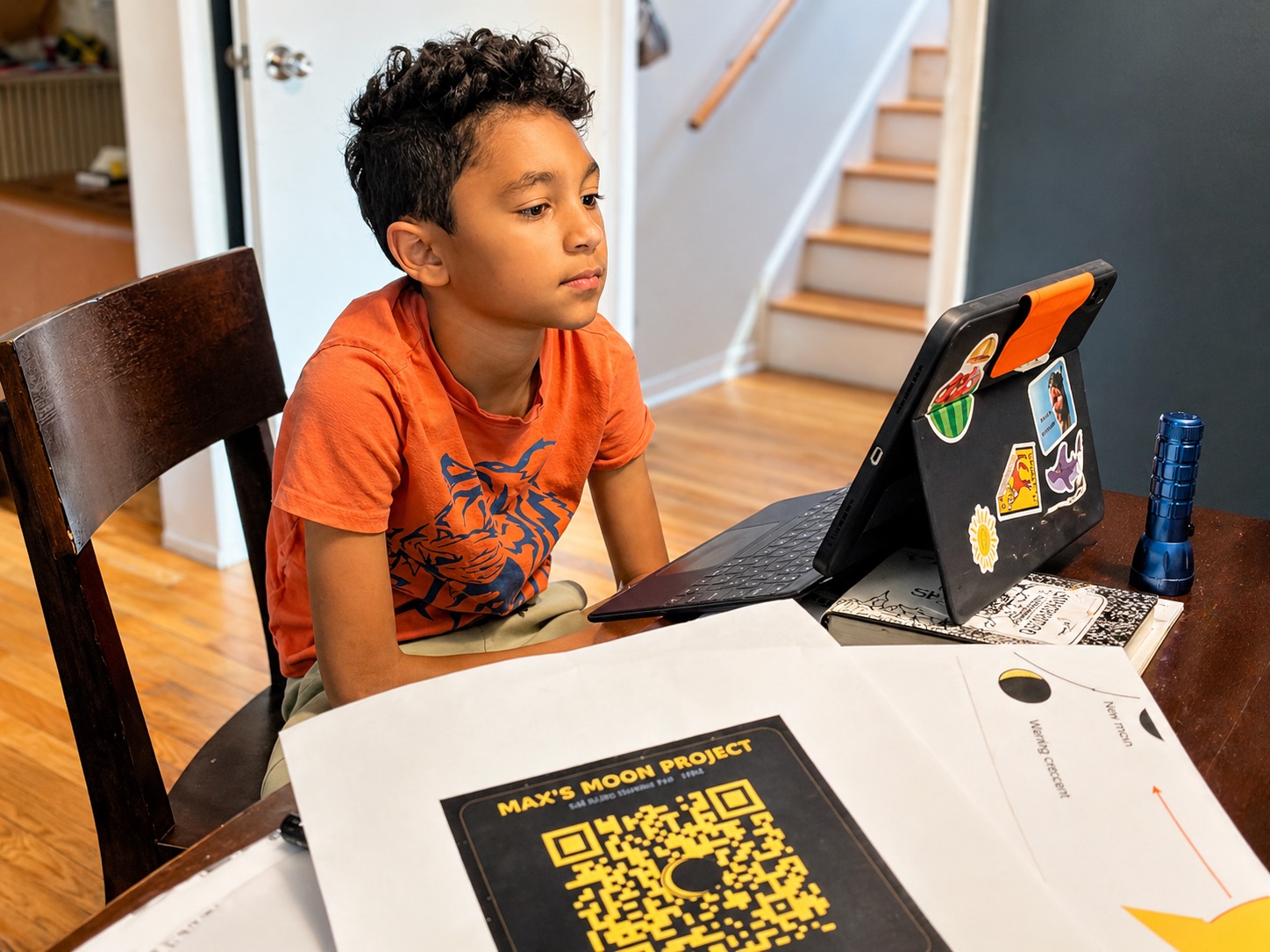
I went to the library and found books about the Moon and space. I also watched videos online about moon phases and took notes in my science notebook.
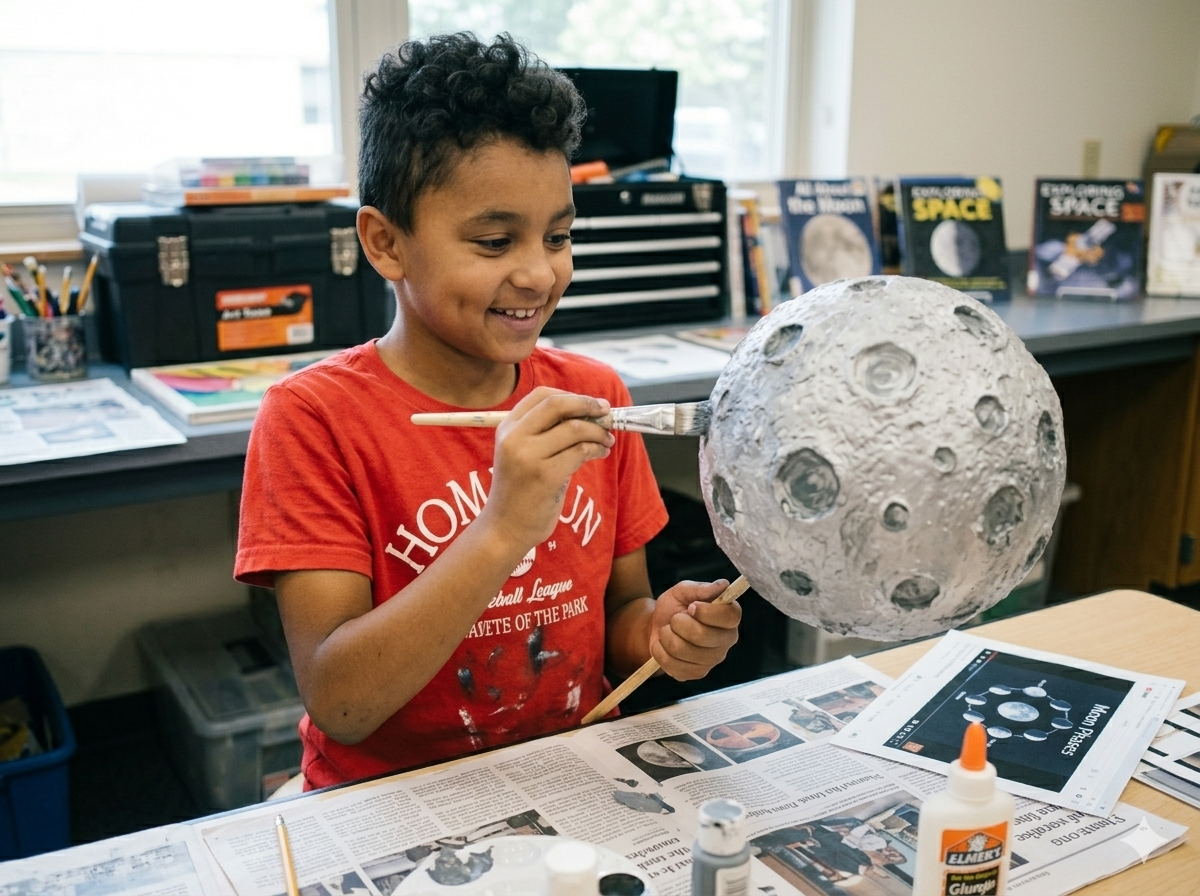
Building the Model
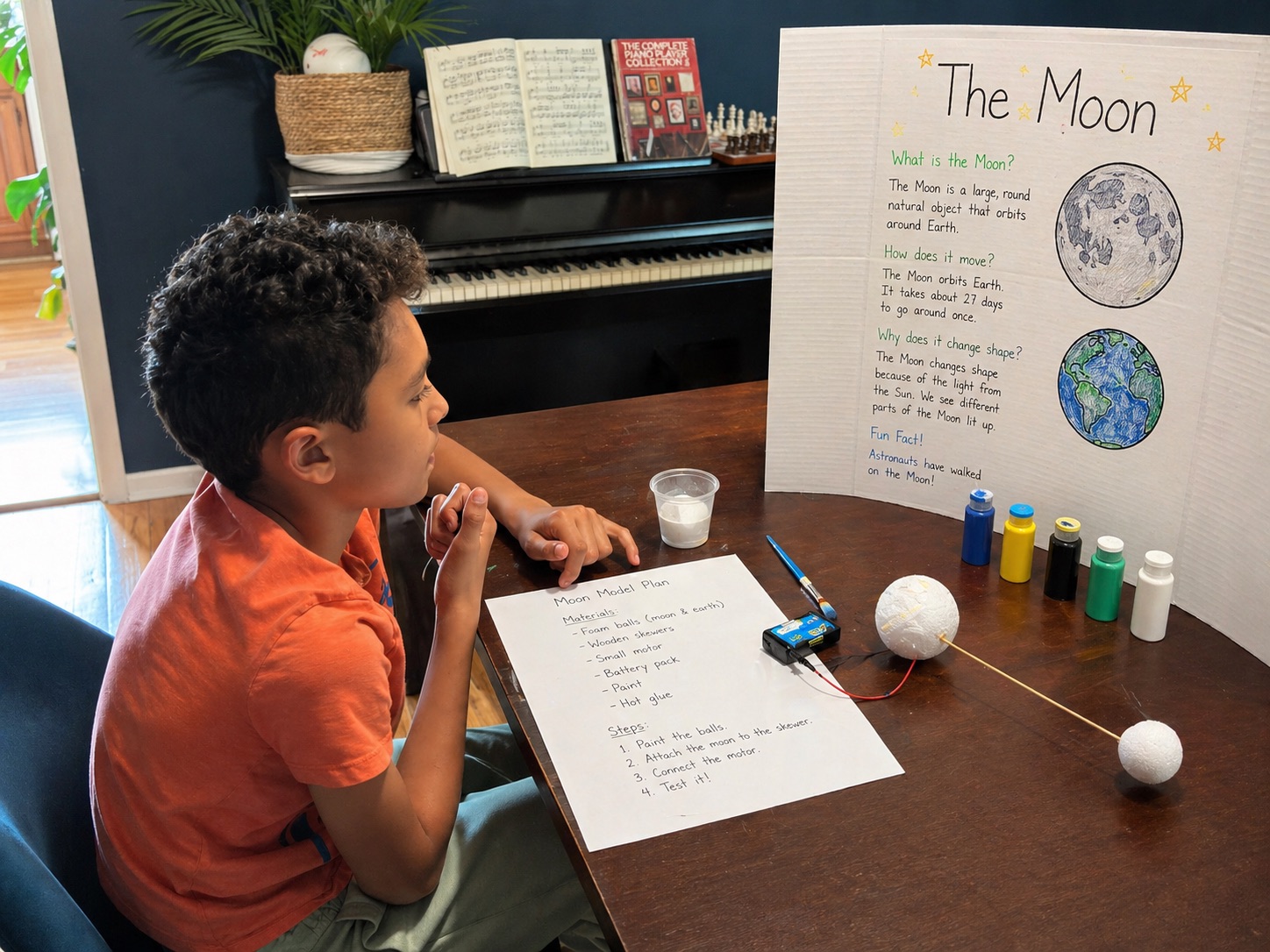
I painted a big foam ball to look like the Moon, with craters and everything. Then I put it on a stick so I could hold it up and move it around.
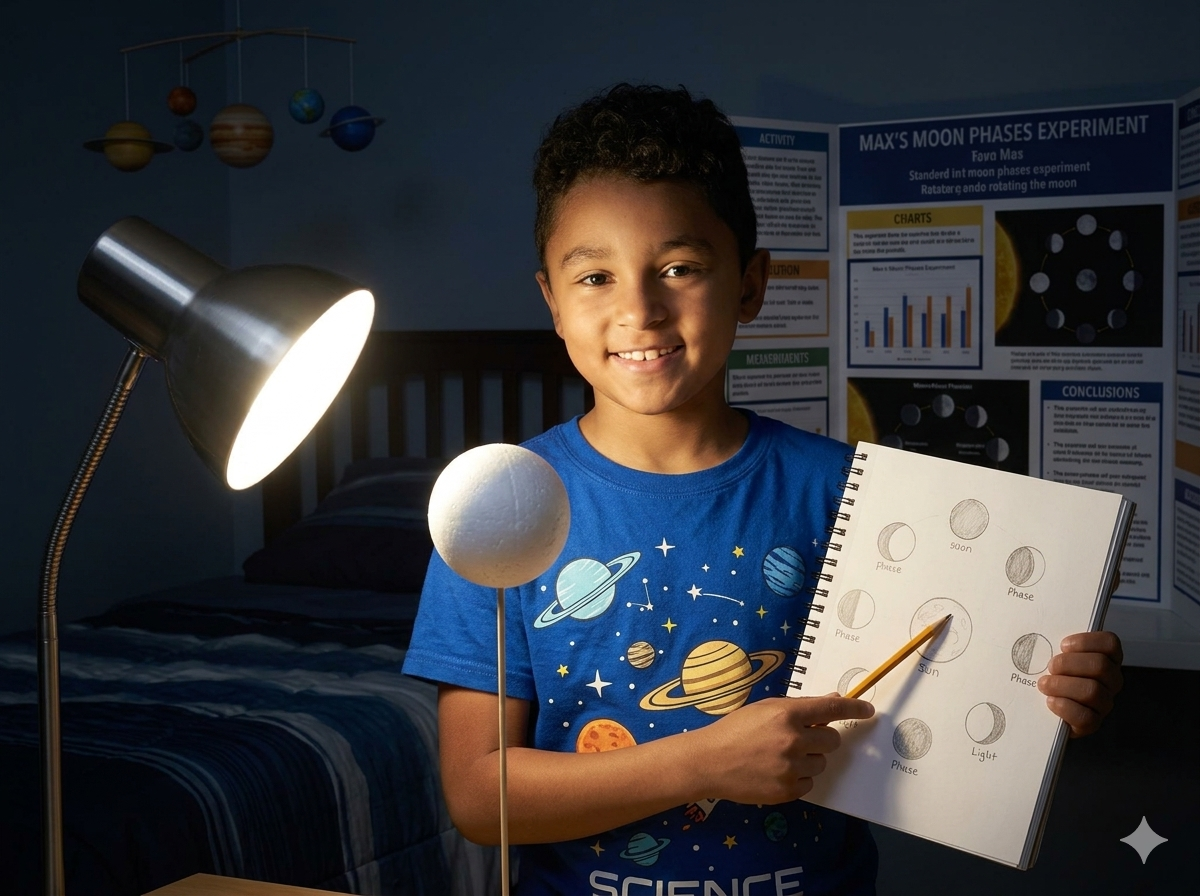
Running the Experiment
In my darkened bedroom, I set up the lamp and went through all 8 positions. I drew pictures of what I saw at each spot and labeled them.
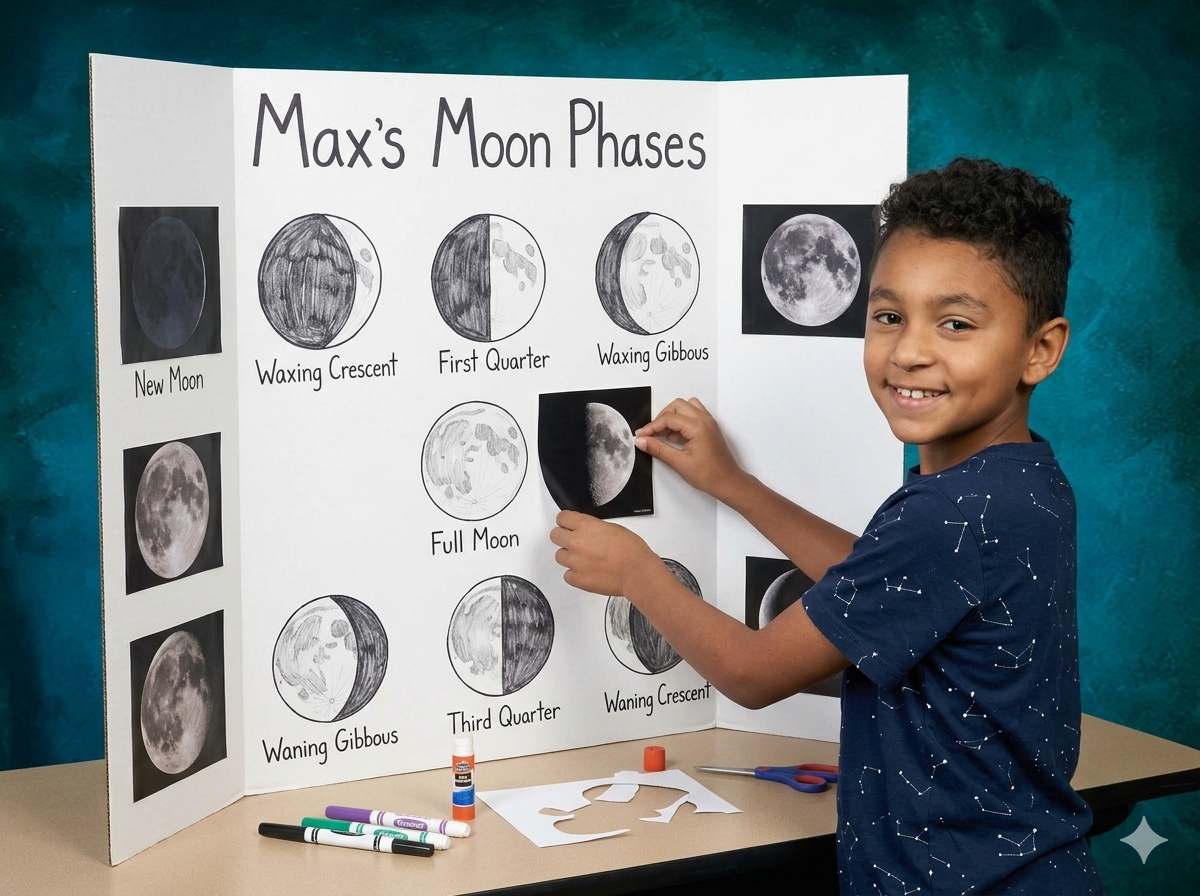
Making the Display
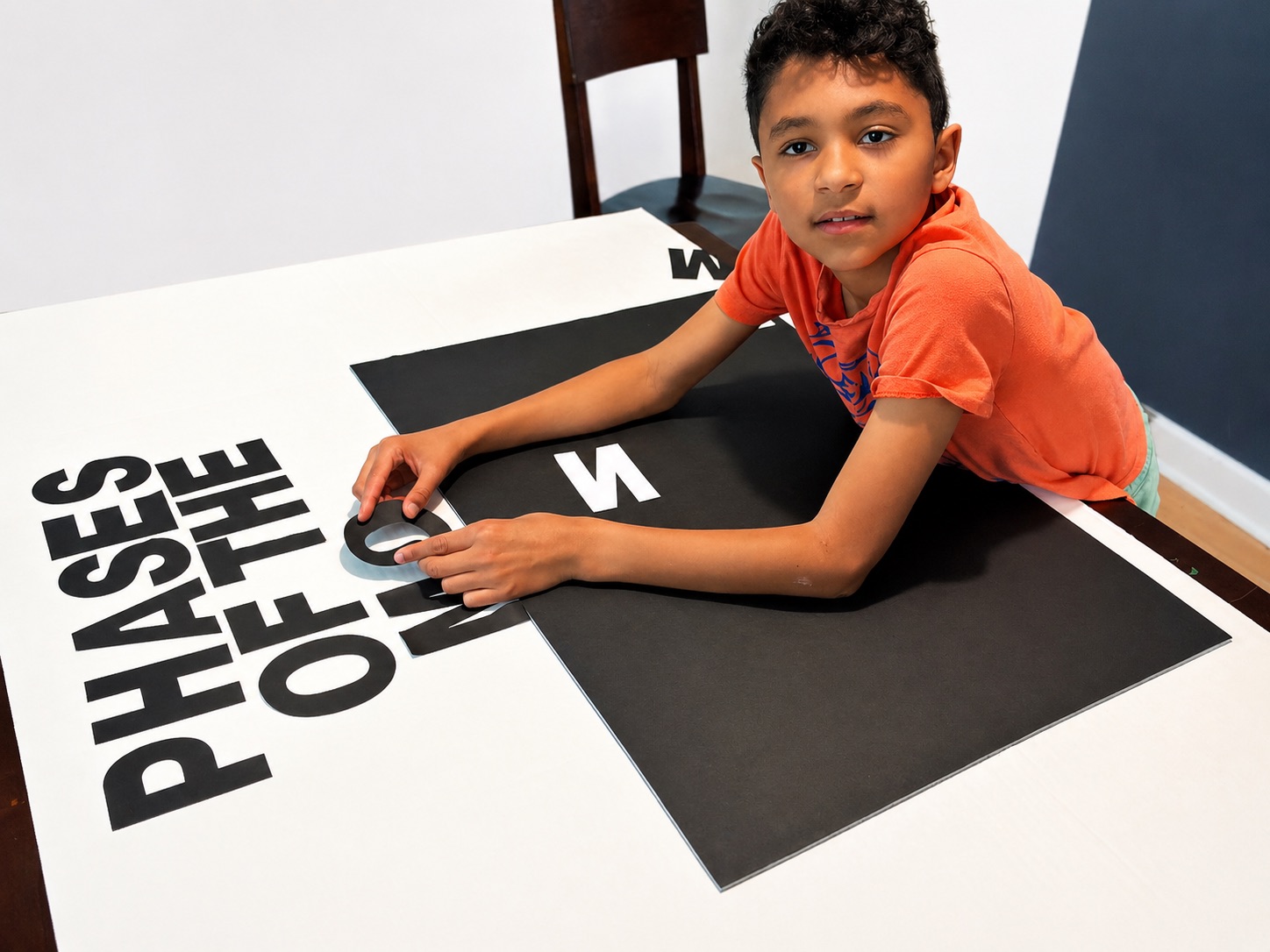
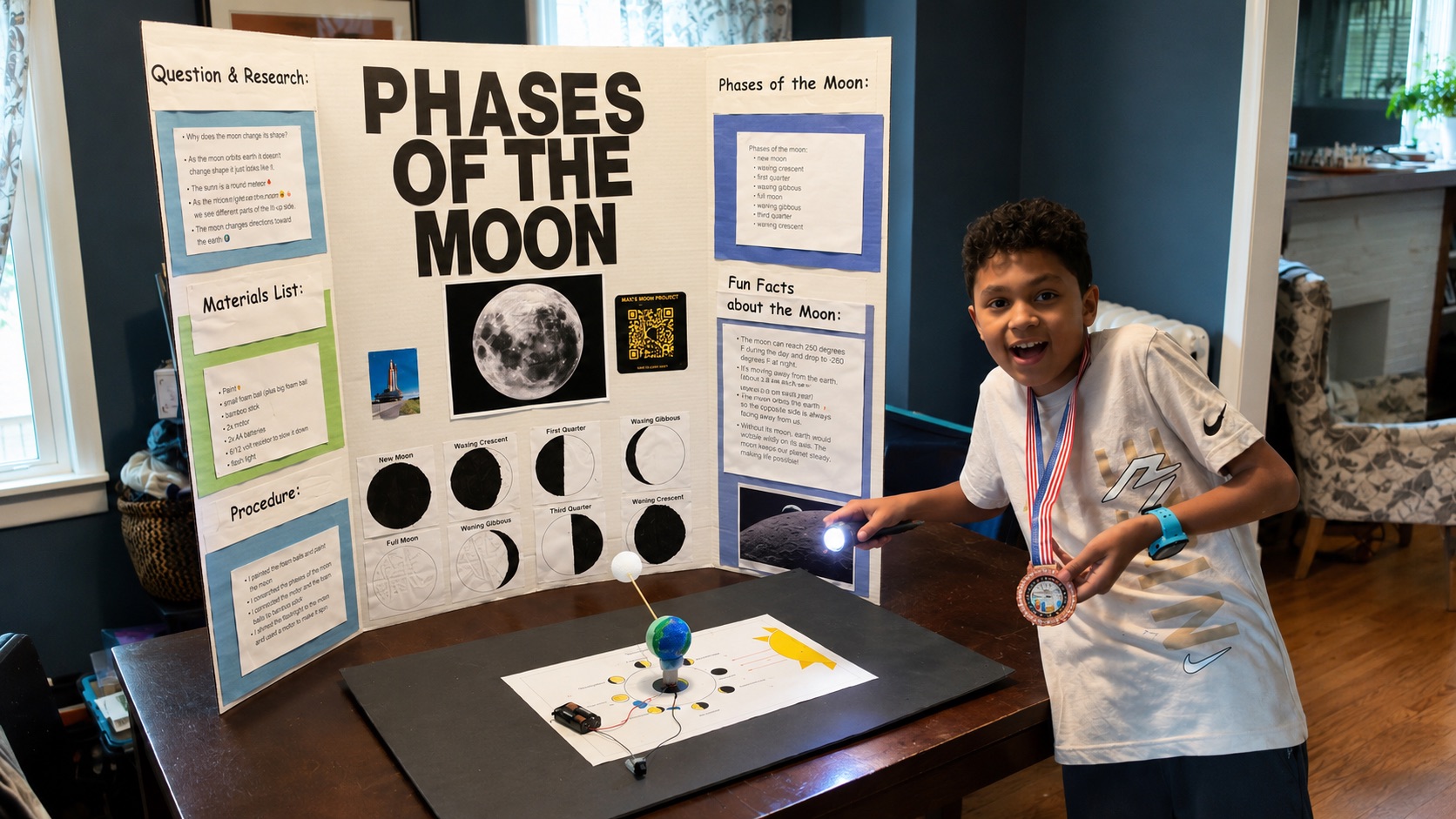
I designed and decorated my science fair board. I printed photos of real moon phases and compared them to my drawings. They matched!
The Project in Pictures
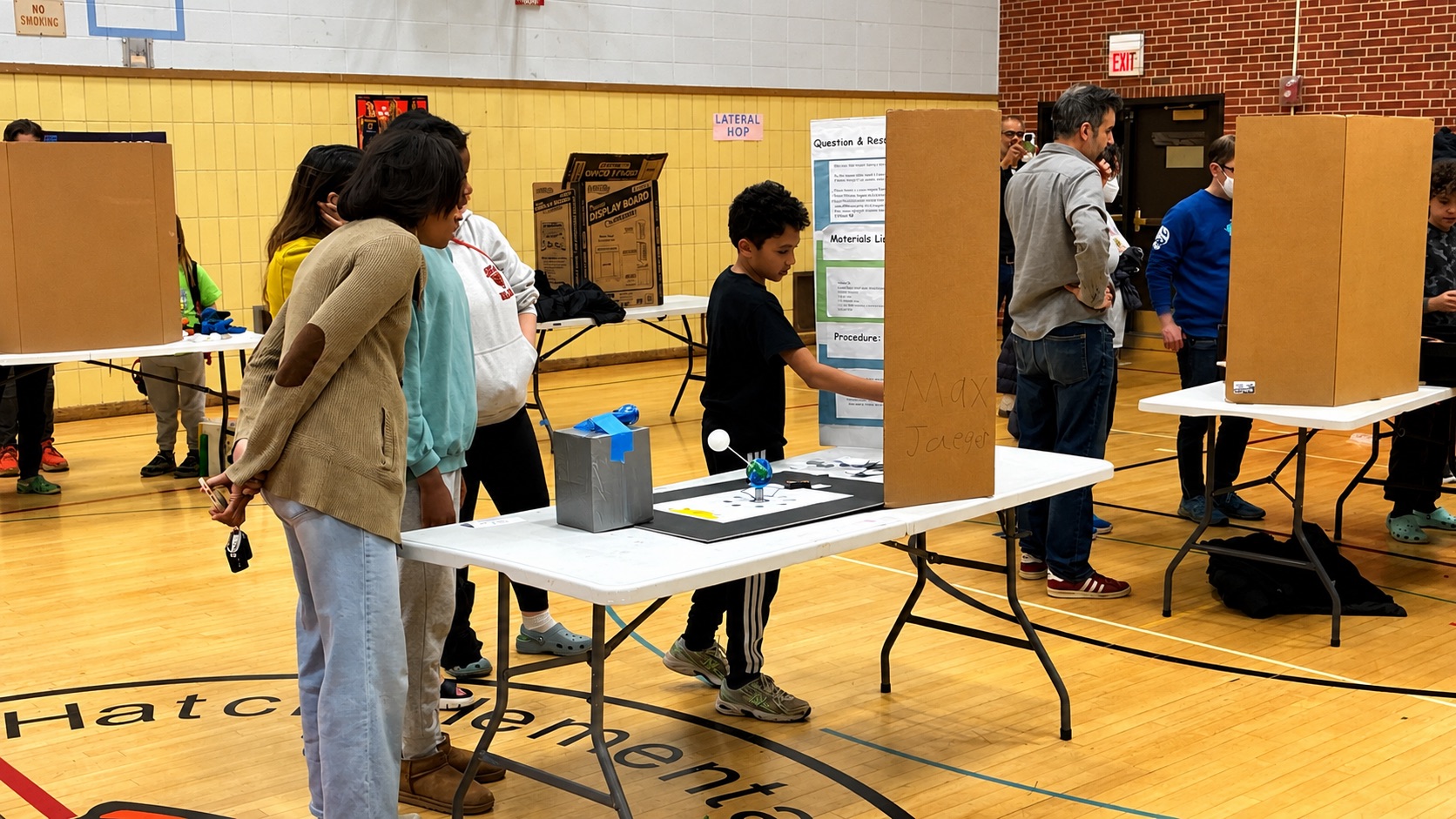
Scroll through photos of the project, from first idea to science fair day!

Science Fair Day
Add assets/fair-day.jpg later
The Artemis II Mission
Right now in 2026, NASA launched Artemis II, the first time humans have flown around the Moon since 1972! On April 6, 2026, four astronauts flew within 7,600 miles of the lunar surface, watching Earth rise and set behind the Moon for the first time in over 50 years.
Scientists used moon phase data, lunar maps, and everything we know about the Moon's orbit to plan this mission safely. That's why understanding moon phases isn't just a school project. It's real rocket science!
Learn more at NASA.govThe Crew
Commander Reid Wiseman, Pilot Victor Glover, and Mission Specialists Christina Koch and Jeremy Hansen. Christina was the first woman, and Jeremy was the first Canadian to travel to the Moon!
The Spacecraft
The crew flew aboard the Orion spacecraft launched by the massive SLS rocket. Orion is built to carry humans farther from Earth than any spacecraft before it, with a big window for incredible views.
The Lunar Flyby
On April 6, 2026, the crew flew just 7,600 miles above the Moon's surface. They photographed craters up close and watched Earth set behind the Moon, the farthest any humans have traveled from Earth since Apollo 17.
What Comes Next
Artemis II proved humans can safely fly to the Moon and back. Artemis III will actually land on the Moon's South Pole, where scientists think there is ice water that could help future astronauts stay longer!
What Phase Is the Moon Tonight?
I can calculate the real moon phase for any date using math - no telescope needed! This shows tonight's phase right here in Oak Park, IL. Try your birthday and see what phase the Moon was in when you were born.
Cool Moon Facts
The Moon is full of surprises. Here are some of my favorites that I discovered during my research!
What Max Learned
My Conclusion
My hypothesis was correct! The Moon does NOT change its shape. It is always a sphere, just like Earth. What changes is how much of the lit-up part we can see from Earth as the Moon travels around us each month.
It takes the Moon about 29.5 days to go through all 8 phases and get back to where it started. That's almost exactly one month! In fact, that's where the word "month" comes from.
What Surprised Me Most
I was really surprised that the Moon is actually always half lit by the Sun. We just can't always see the lit half from Earth. It was also cool to learn that the same side of the Moon always faces Earth. We never see the far side from the ground!
What I Would Do Next
If I do this experiment again, I would track the real Moon in the sky every night for a whole month and write down what phase it was in. I'd also love to learn more about how the Moon causes tides in the ocean!
Hypothesis:
SUPPORTED!
Photo: Max at the science fair!
Replace with sciencefair-max.jpg
Thank you for visiting my project! I hope you learned something cool about the Moon.
Max
My Sources
These are the websites and places I used to learn about the Moon. They are all official and trustworthy!